
Driving Lessons Halifax – Top 10 Reasons Candidates Fail Their Driving Test
Most driving test faults don't happen because learners can't drive. They happen because of small mistakes in observation, planning or judgement. Understanding these common faults can help you avoid them and build safer driving habits for life.
 Poor observations at junctions
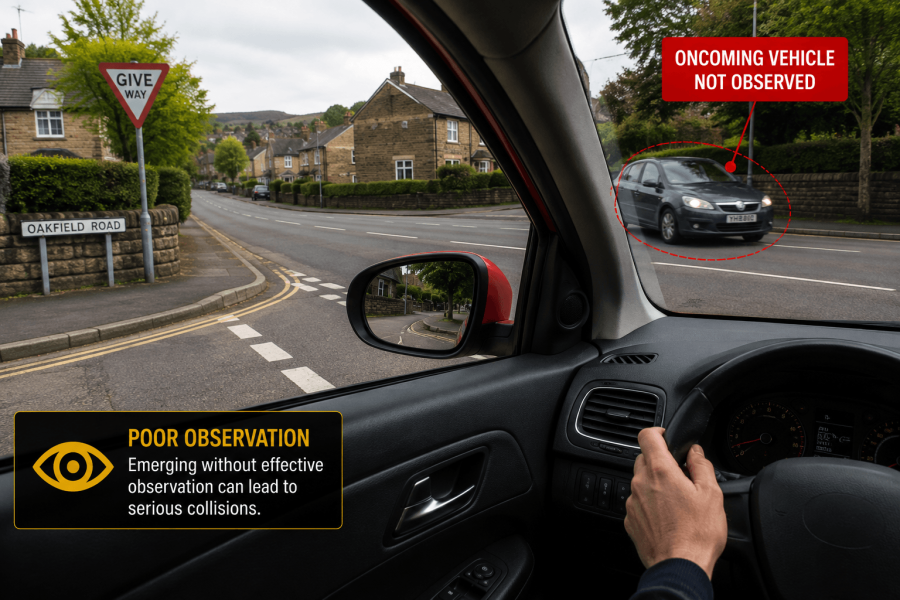
- Ineffective junction observations.
Failing to properly check for traffic when approaching or entering a junction is one of the most common faults. Drivers must look both ways, assess traffic speed, and only move when it is safe. Good observation helps prevent dangerous situations.
 Incorrect use of mirrors
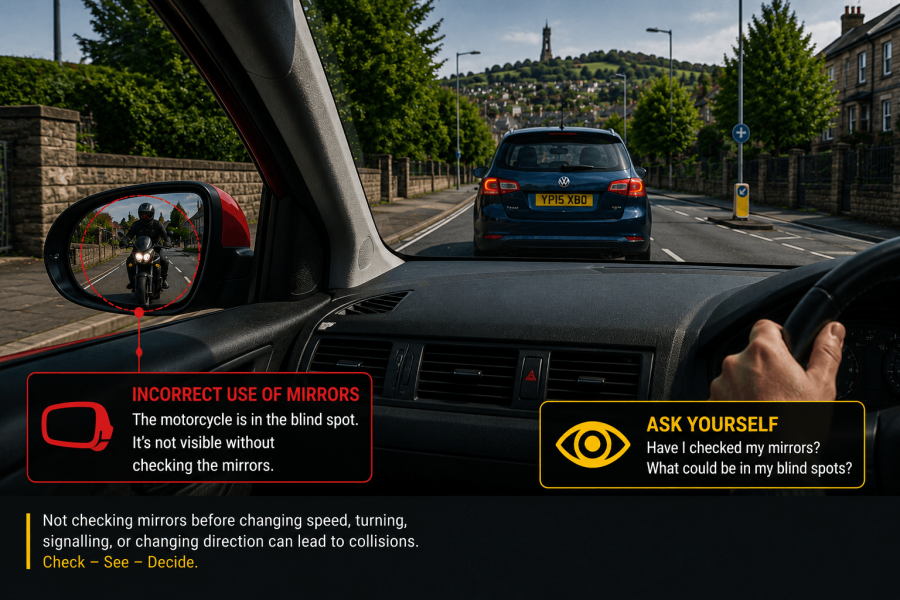
2. Incorrect mirror use when changing direction
Mirrors should be checked regularly while driving. Examiners expect drivers to check mirrors before changing speed, turning, signalling, or changing direction. Proper mirror use helps you stay aware of other road users.
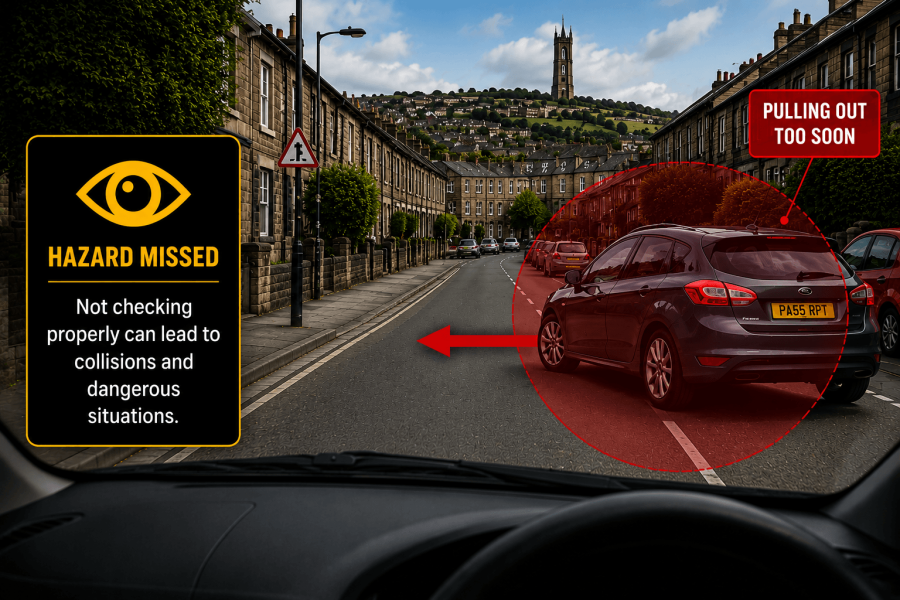
3. Unsafe moving off
Before moving off, drivers must check mirrors and blind spots to ensure the road is clear. Failing to observe properly can put pedestrians, cyclists, and other vehicles at risk.
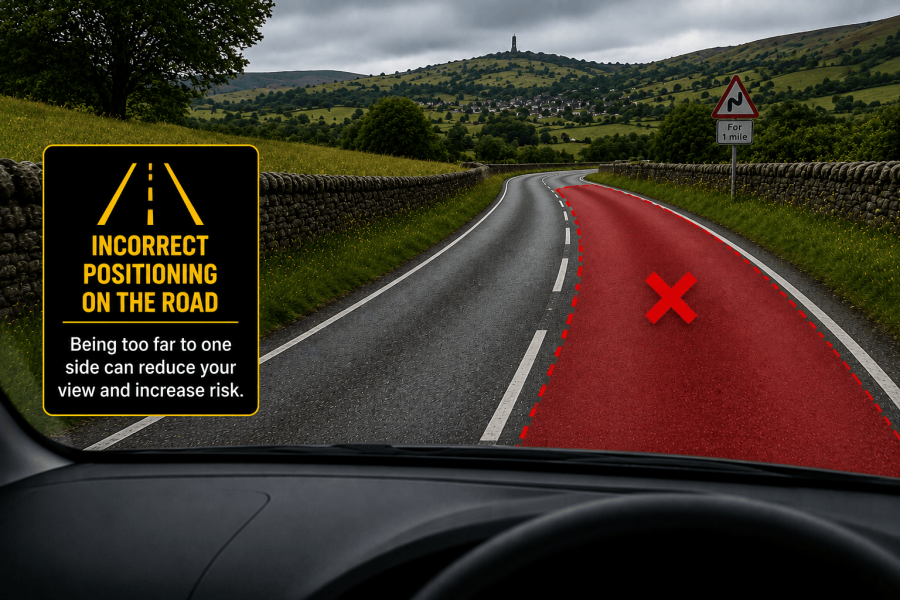
4. Incorrect positioning for right turns at junctions
Positioning too far to the left or right can confuse other road users, obstruct traffic or make the turn more difficult. Position correctly, usually just left of the centre line, while keeping clear of oncoming traffic.
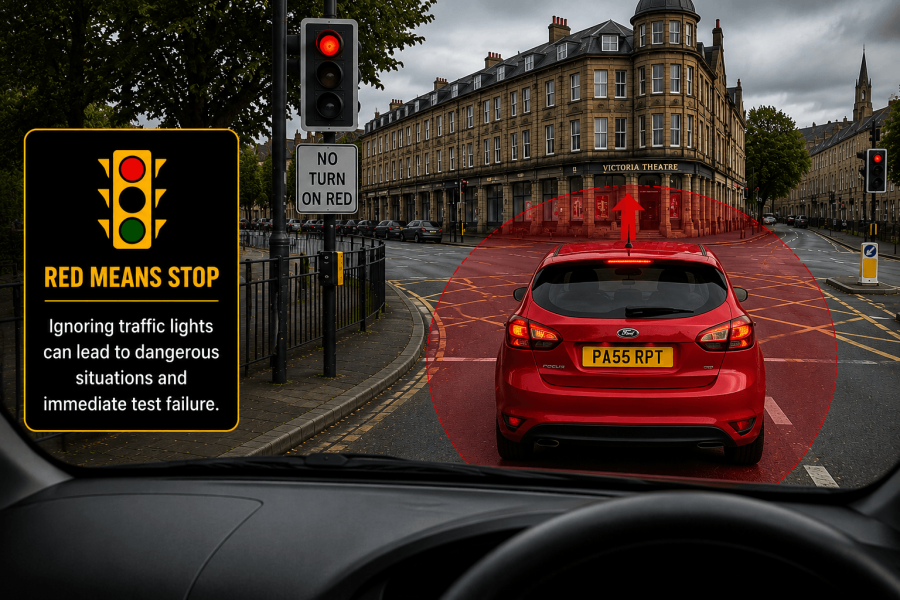
5. Inappropriate response to traffic lights
Drivers must recognise and respond correctly to traffic lights. This includes stopping safely at red lights, preparing to stop at amber lights, and moving off safely when the light turns green.
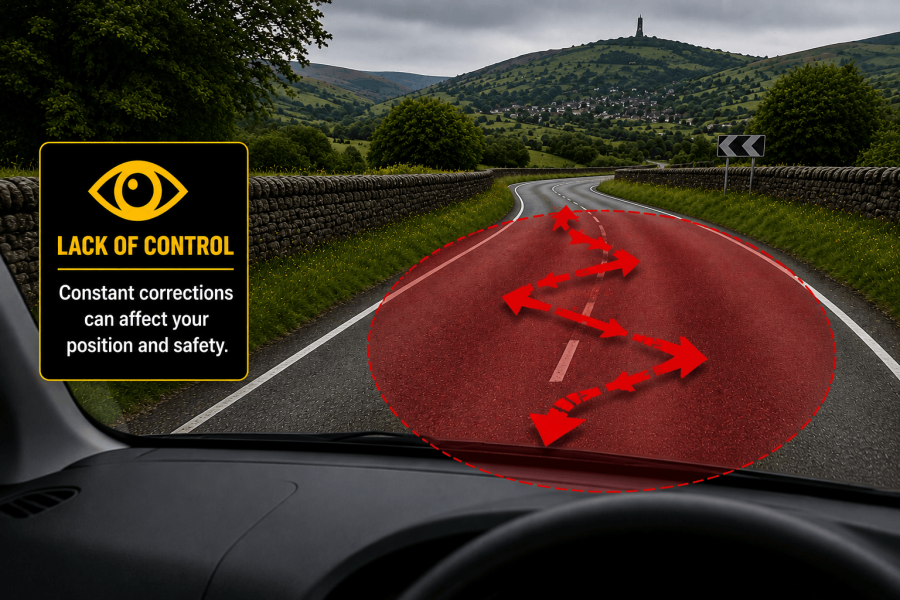 Poor steering control
6. Poor Steering Control
Steering should be smooth, controlled and applied at the appropriate time. Steering too early, too late or by an insufficient amount can affect the vehicle’s position. The method used is less important than maintaining safe control.
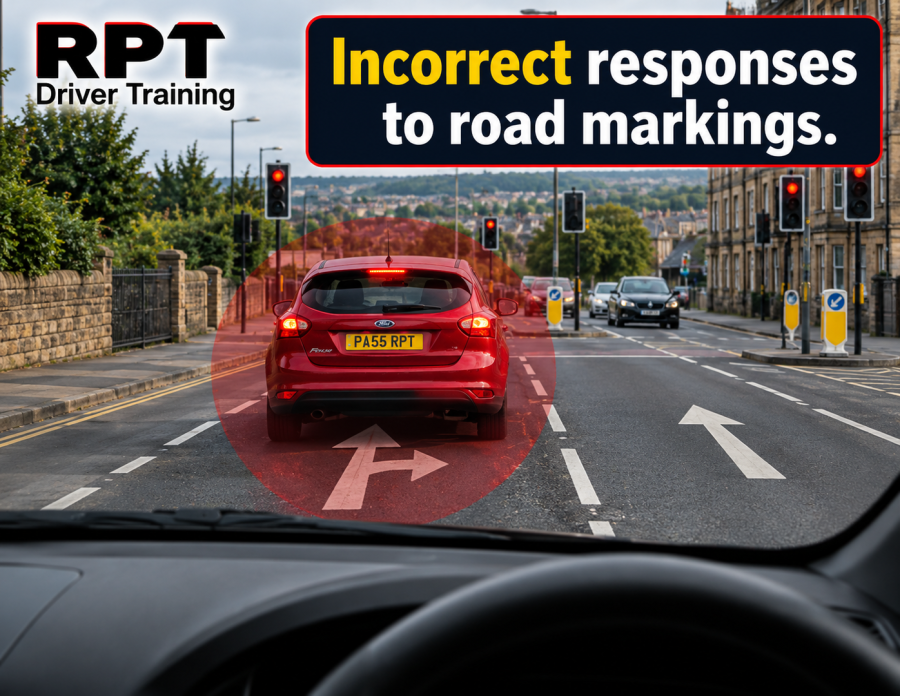
7. Incorrect responses to road markings
Failing to follow road markings, such as lane arrows, stop lines or give-way markings, can cause confusion and danger. Read the markings early, understand what they mean and respond correctly.
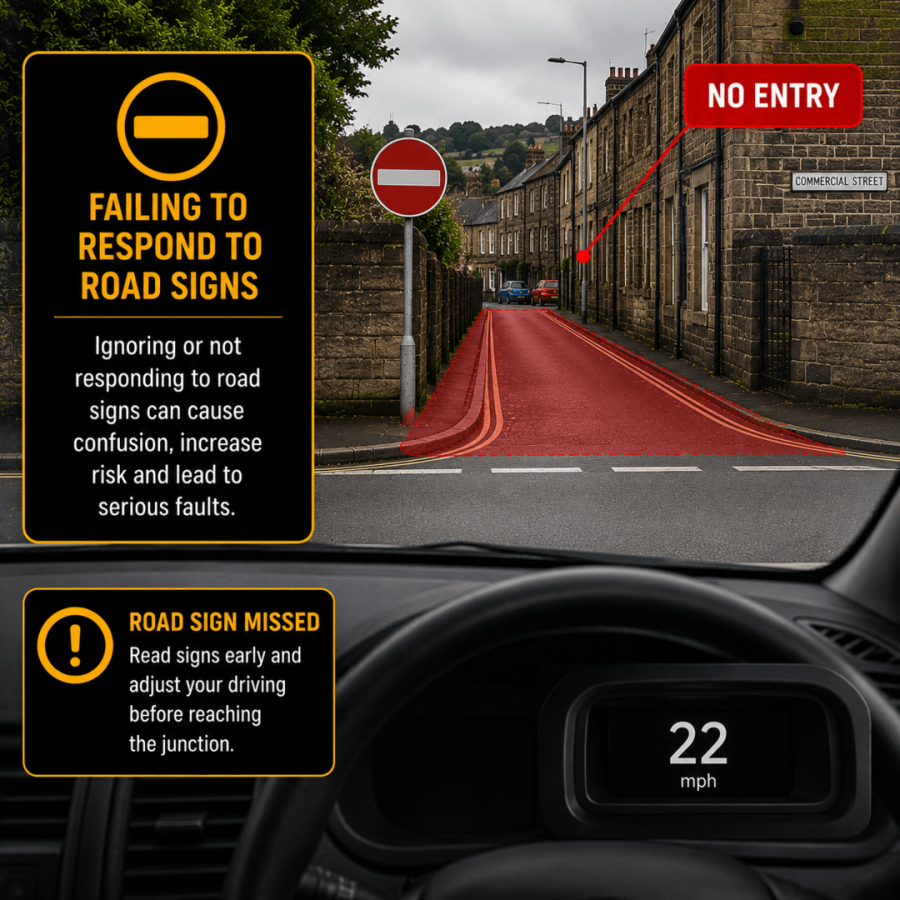
8. Incorrect responces to traffic signs
Road signs provide important information about speed limits, hazards, and road rules. Drivers must recognise and react to signs quickly to ensure safe driving.
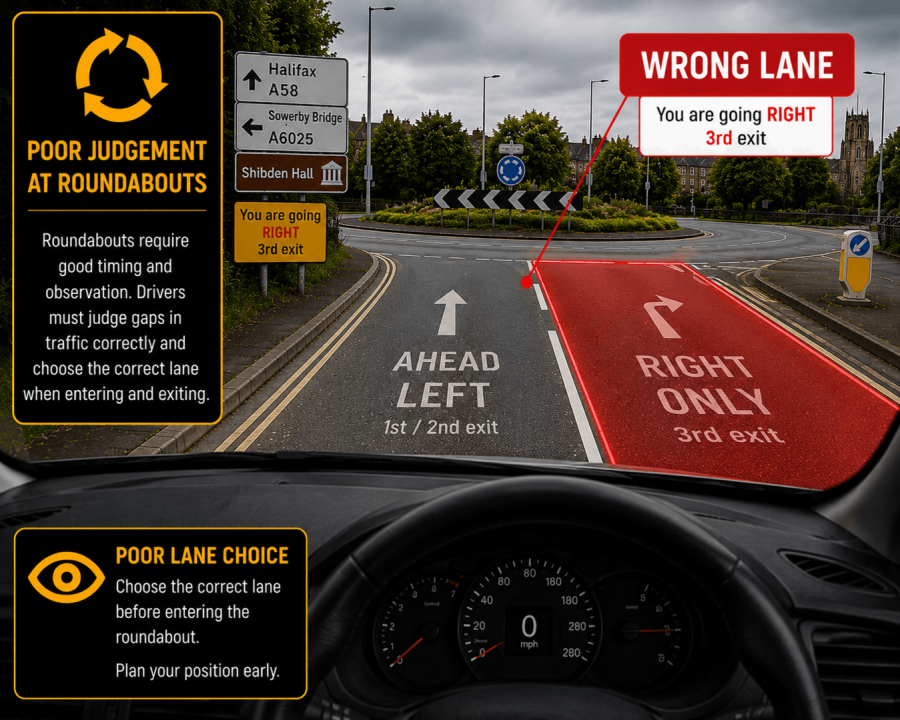
9. poor road positioning during normal driving
Driving too close to the kerb, centre line or parked vehicles can increase risk or wrong lane. Maintain a safe, appropriate road position, adjusting for road width, hazards and other traffic.
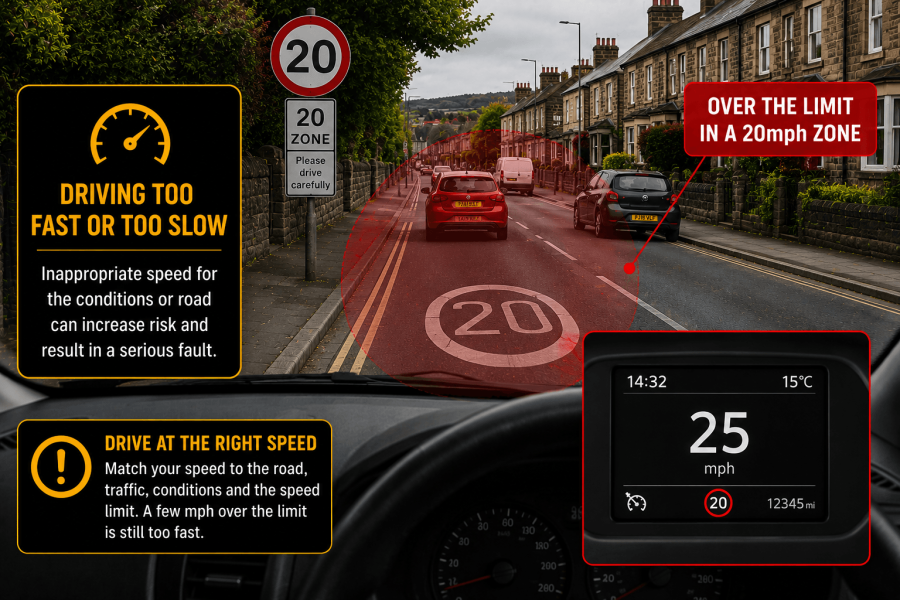
10. Unsafe or reasonable speed
Driving above the speed limit is dangerous, but driving too slowly can also cause problems for other road users. Maintaining the correct speed while adapting to road conditions is important.
Improve Your Chances of Passing
By practising these skills during your driving lessons and gaining experience on different types of roads, you can greatly improve your chances of passing your driving test.
At RPT Driver Training, we help learners develop the confidence, awareness, and skills needed to become safe drivers and pass their test successfully.
Many learners fail their driving test because of mistakes that can easily be avoided with the right preparation and practice. Understanding the most common reasons for failure can help you focus on improving these areas before your test. Learning to drive can be challenging, and many learners taking driving lessons in Halifax struggle with the same common mistakes during their driving test.
Based on DVSA’s top 10 reasons for failing car driving tests in Great Britain, April 2024–March 2025. official DVSA guide.
 Print